

WILLOW & OAK
Bridal Couture
Studio Nayéh Concept Project
Product Development | Pattern Development | Sampling & Fit Validation | Technical Development | Sourcing | Manufacturing
THE PROJECT
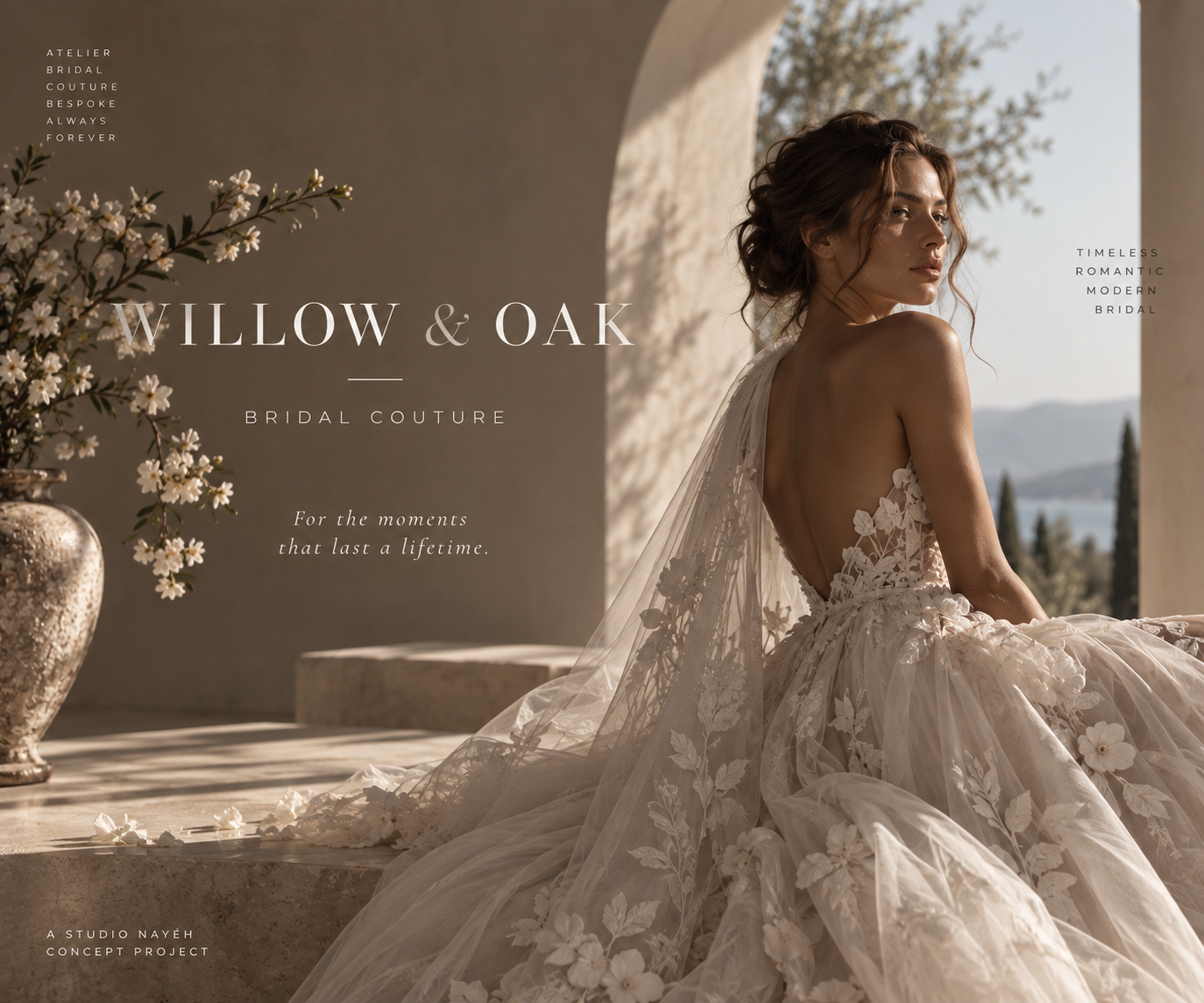
WILLOW & OAK was developed as a Bridal Couture concept focused on timeless silhouettes, refined structure and intricate craftsmanship
The collection explores four distinct bridal gowns, each developed around a different approach to couture construction,
from sculpted bodices and structured skirts to delicate lace, flowing tulle and statement detailing
The development focused on creating gowns that combine romantic design with precise technical construction,
considering fit, internal support, fabric behaviour, movement and finishing at every stage
PROJECT OVERVIEW
NUMBER OF STYLES
FOUR
CATEGORY
BRIDAL COUTUREPOSITIONING
LUXURY BRIDALWEARDEVELOPMENT
PORTUGAL
THE BRIEF
The objective was to create a bridal couture collection that felt:
Romantic but contemporary | Structured without feeling restrictive | Timeless without becoming traditional
Couture-focused | Cohesive across the collection | Suitable for premium production
The collection was developed around sculpted silhouettes, refined proportions, premium bridal fabrics and intricate detailing, with each gown designed to have its own identity while contributing to a cohesive WILLOW & OAK bridal aesthetic
OUR APPROACH
-
Each WILLOW & OAK gown was developed as a fully defined bridal product, translating the four silhouettes into specific construction, material and finishing requirements before pattern development.
+ Silhouette Engineering: Bodice-to-skirt proportions, neckline shape, waist placement, skirt volume, train length and overall garment balance established for each gown.
+ Bodice Construction: Panel configuration, bust shaping, internal support, boning placement, waist stabilisation and lining requirements defined according to the silhouette.
+ Skirt Architecture: Layering, fullness, seam placement and train construction developed to achieve the required volume and movement without unnecessary weight.
+ Fabric & Structure: Satin, lace, tulle and structured bridal fabrics assessed for drape, opacity, weight, recovery and compatibility with internal construction.
+ Couture Details: Lace placement, floral appliqué, bows, covered buttons and decorative elements planned around seams, openings and garment structure.
+ Fit & Movement: Neckline security, bust support, waist fit, arm movement, walking ease and train handling considered throughout development.
+ Production Planning: Construction sequence, material consumption, specialist finishing and labour-intensive detailing established for controlled premium production.
The result was a defined technical foundation for pattern development, sampling, sourcing and manufacturing.
-
Material development focused on achieving the specific drape, structure, opacity, support and surface finish required by each gown, while ensuring compatibility between the outer fabric and internal construction.
+ Bridal Fabrics: Satin, silk, mikado, crepe, lace, tulle and organza assessed by weight, drape, opacity, sheen, stiffness, recovery and dimensional stability.
+ Layering: Outer fabrics, underlayers, lining, tulle and organza evaluated together to control transparency, volume, body and movement.
+ Structural Materials: Interfacing, fusible support, coutil, boning, waist stays and stabilising tapes selected according to bodice structure and required support.
+ Lace & Appliqué: Motif scale, border placement, direction, repeat and cutting requirements mapped before application, with appliqué positioned around key construction lines.
+ Skirt & Train Materials: Tulle, horsehair braid and structural netting assessed for hem control, volume, train shape and recovery without excessive weight.
+ Closures & Components: Invisible zips, hooks and eyes, covered buttons, rouleau loops and internal fastening systems selected according to fabric weight and construction.
+ Material Testing: Shrinkage, fraying, seam stability, pressing response, surface marking and interaction between layers assessed through sampling.
+ Consumption & Production: Fabric width, usable width, lace placement, repeat requirements and pattern consumption reviewed to establish realistic material quantities and production costing.
The material package was developed as an integrated system, ensuring every fabric and component supported the intended silhouette, construction and final finish.
-
Each gown was developed through bespoke bridal pattern engineering, integrating the outer silhouette, internal structure and lining into a controlled pattern system.
+ Bodice: Bust shaping, panel lines, waist suppression and princess seams engineered for precise contour and support.
+ Corsetry: Internal corset pieces, boning channels and waist stabilisation developed alongside the outer bodice.
+ Skirt & Train: Individual panels drafted for circumference, fullness, flare, sweep and train proportion.
+ Layering: Separate patterns developed for lining, underlining, tulle, organza and structural layers.
+ Sleeves & Necklines: Cap height, pitch, ease, neckline curves and openings developed for fit and movement.
+ Lace Placement: Pattern pieces aligned with lace motifs, borders and directional details.
+ Technical Accuracy: Grainlines, notches, balance points, seam allowances and construction references incorporated for sampling and production.
The final patterns formed a complete technical garment system, ready for sampling, grading and production.
-
Each gown was sampled to validate the pattern engineering, internal structure, fabric behaviour and final silhouette before production approval.
+ Toile & First Sample: Bodice and skirt construction tested before committing to final bridal fabrics where appropriate.
+ Bodice Fit: Bust position, neckline tension, shoulder balance, waist suppression and centre-front/back alignment checked against the intended measurements.
+ Internal Structure: Boning placement, corsetry, waist stays, interlinings and support layers assessed for stability without compromising comfort.
+ Skirt & Train: Fullness, hem sweep, train length, layer balance and weight distribution checked on the body.
+ Sleeves & Movement: Armhole depth, sleeve pitch, cap height, bicep ease and range of movement validated.
+ Fabric Behaviour: Drape, stretch, recovery, seam tension, pressing response and interaction between outer and internal layers assessed.
+ Couture Details: Lace placement, appliqué, closures, covered buttons and finishing details checked for alignment and construction accuracy.
+ Corrections: Fit, proportion and construction adjustments transferred back to the master patterns before final technical approval.
-
The technical package translated each approved WILLOW & OAK gown into clear, repeatable production specifications, documenting construction, measurements, materials and couture finishing.
+ Technical Flats: Front, back and detail views showing seams, panels, neckline, sleeves, closures, train and decorative placement.
+ Measurement Specification: Detailed POM measurements covering bust, waist, hip, shoulder, neckline, armhole, sleeve, bodice length, skirt length and train.
+ Construction Details: Seam allowances, stitch requirements, seam finishes, boning channels, hems, lining attachment and construction sequence defined.
+ BOM: Main fabric, lining, underlining, interfacing, boning, closures, lace, appliqué, tulle and trims documented with quantities and specifications.
+ Lace & Embellishment Mapping: Motif placement, borders, repeats and appliqué positioning documented for consistent execution.
+ Internal Construction: Corsetry, waist stays, support layers, lining and fastening systems specified separately from the outer garment.
+ Labels & Components: Brand, size and care labels, closure components and internal finishing requirements documented.
+ Production Files: Final CAD patterns, graded sizes, A0 markers, measurement charts, construction specifications and material information prepared for manufacturing.
-
Sourcing was developed around the specific technical requirements of each gown, ensuring every material and component was compatible with the approved pattern, construction and couture finish.
+ Main Fabrics: Satin, silk, crepe, mikado, lace, tulle and organza assessed for GSM, width, drape, opacity, sheen, structure and dimensional stability.
+ Structural Materials: Coutil, fusibles, interlinings, boning, horsehair braid, stabilising tapes and waist stays selected according to the required support and silhouette.
+ Lace & Appliqué: Lace sourced according to motif scale, repeat, border width, usable width and suitability for placement and cutting.
+ Linings & Underlayers: Selected according to skin contact, weight, opacity, friction, movement and compatibility with the outer fabric.
+ Closures & Trims: Invisible zips, hooks and eyes, covered buttons, rouleau loops and other components matched to fabric weight and construction.
+ Supplier Assessment: Quality, consistency, MOQ, colour availability, lead times and repeat-production capability reviewed before approval.
+ Consumption & Costing: Pattern consumption, usable fabric width, lace requirements and component quantities calculated to establish accurate production costs.
+ Production Approval: Materials checked for availability and consistency before bulk purchasing and manufacturing release.
-
Manufacturing was carried out from the approved patterns, validated samples and final technical specifications, with construction controlled according to the requirements of each couture gown.
+ Cutting: Fabric, lining, lace, tulle and structural layers cut according to approved patterns, grainlines and placement requirements.
+ Bodice Construction: Panels assembled with controlled seam matching, internal support, boning channels, waist stabilisation and structured lining.
+ Skirt & Train: Panels, layers and structural elements assembled to maintain volume, sweep, symmetry and train proportion.
+ Lace & Appliqué: Motifs positioned and applied according to the approved placement plan, with controlled alignment across seams.
+ Closures & Finishing: Zips, hooks, covered buttons, hems and internal finishing executed according to the technical specifications.
+ Pressing: Each construction stage pressed according to the fabric and structural requirements to maintain shape without surface damage.
+ Quality Control: Measurements, symmetry, seam quality, fit, construction, fabric defects, detailing and finishing checked against the approved sample.
+ Final Inspection: Completed gowns inspected, steamed, finished and prepared for final presentation, packaging and delivery.
THE RESULT
The WILLOW & OAK concept demonstrates a complete bridal development pathway:
CONCEPT
|
PRODUCT DEVELOPMENT
|
PATTERN DEVELOPMENT
|
SAMPLING
|
TECHNICAL DEVELOPMENT
|
SOURCING
|
MANUFACTURING
|
QUALITY CONTROL
|
DELIVERY
|
CONCEPT | PRODUCT DEVELOPMENT | PATTERN DEVELOPMENT | SAMPLING | TECHNICAL DEVELOPMENT | SOURCING | MANUFACTURING | QUALITY CONTROL | DELIVERY |
THE COLLECTION
-
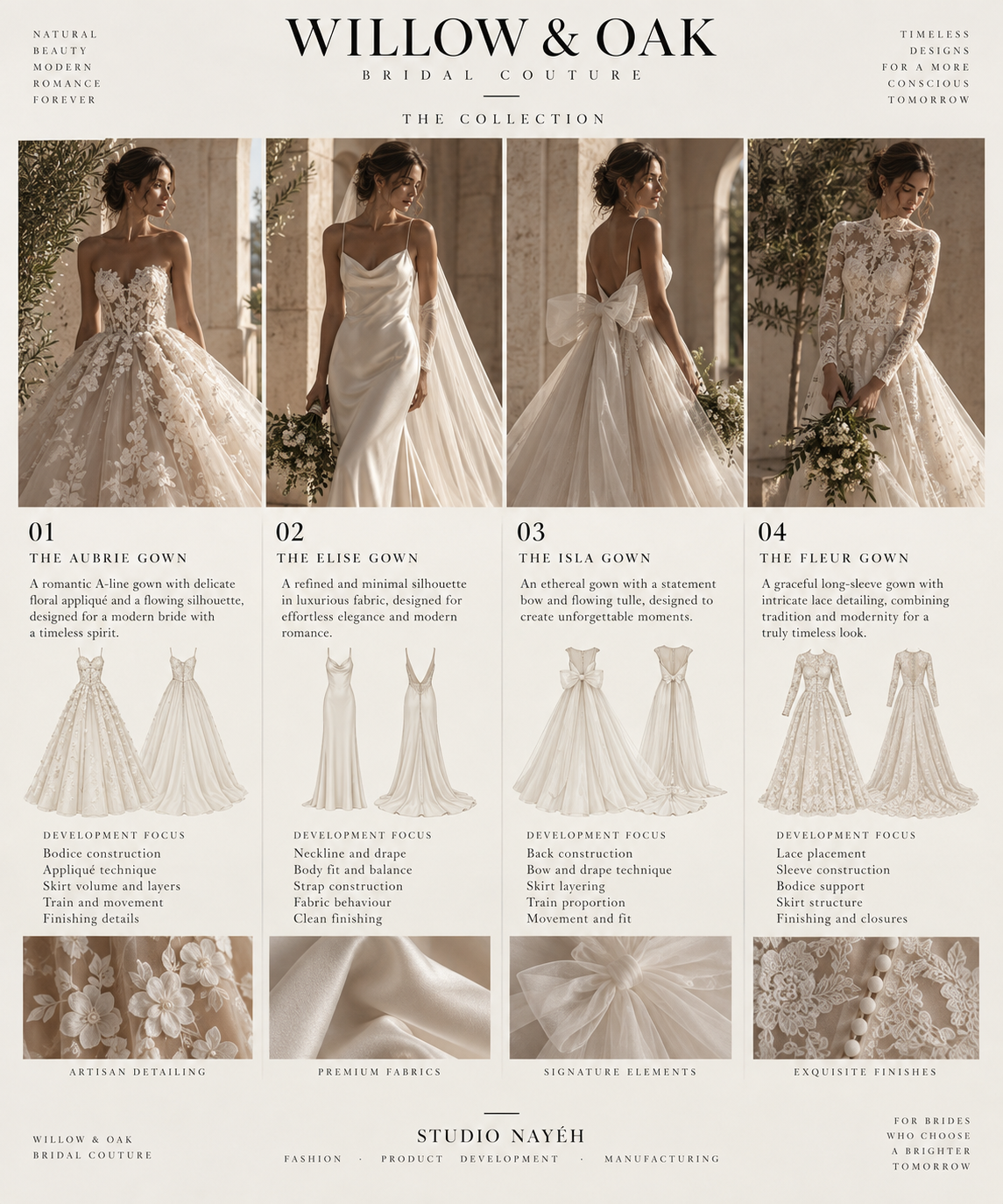
A romantic A-line gown featuring delicate floral appliqué and a flowing silhouette, balancing soft movement with considered structure.
Development Focus: Bodice construction | Appliqué placement | Skirt volume | Train development | Internal support
-
A refined, minimalist bridal silhouette focused on clean lines, controlled drape and understated luxury.
Development Focus: Neckline construction | Body contour | Fabric drape | Strap development | Clean finishing
-
An ethereal gown combining flowing tulle with a statement bow and elongated silhouette for a more dramatic bridal proportion.
Development Focus: Back construction | Bow engineering | Tulle layering | Train proportion | Movement
-
A graceful long-sleeve gown incorporating intricate lace and a more structured silhouette, balancing traditional bridal detailing with contemporary proportions.
Development Focus: Lace placement | Sleeve construction | Bodice support | Skirt structure | Closures & finishing